At first, the snowfield looked empty. We had been scanning the open plateau for some time, checking every patch of exposed ground and every low rise where birds might be feeding.
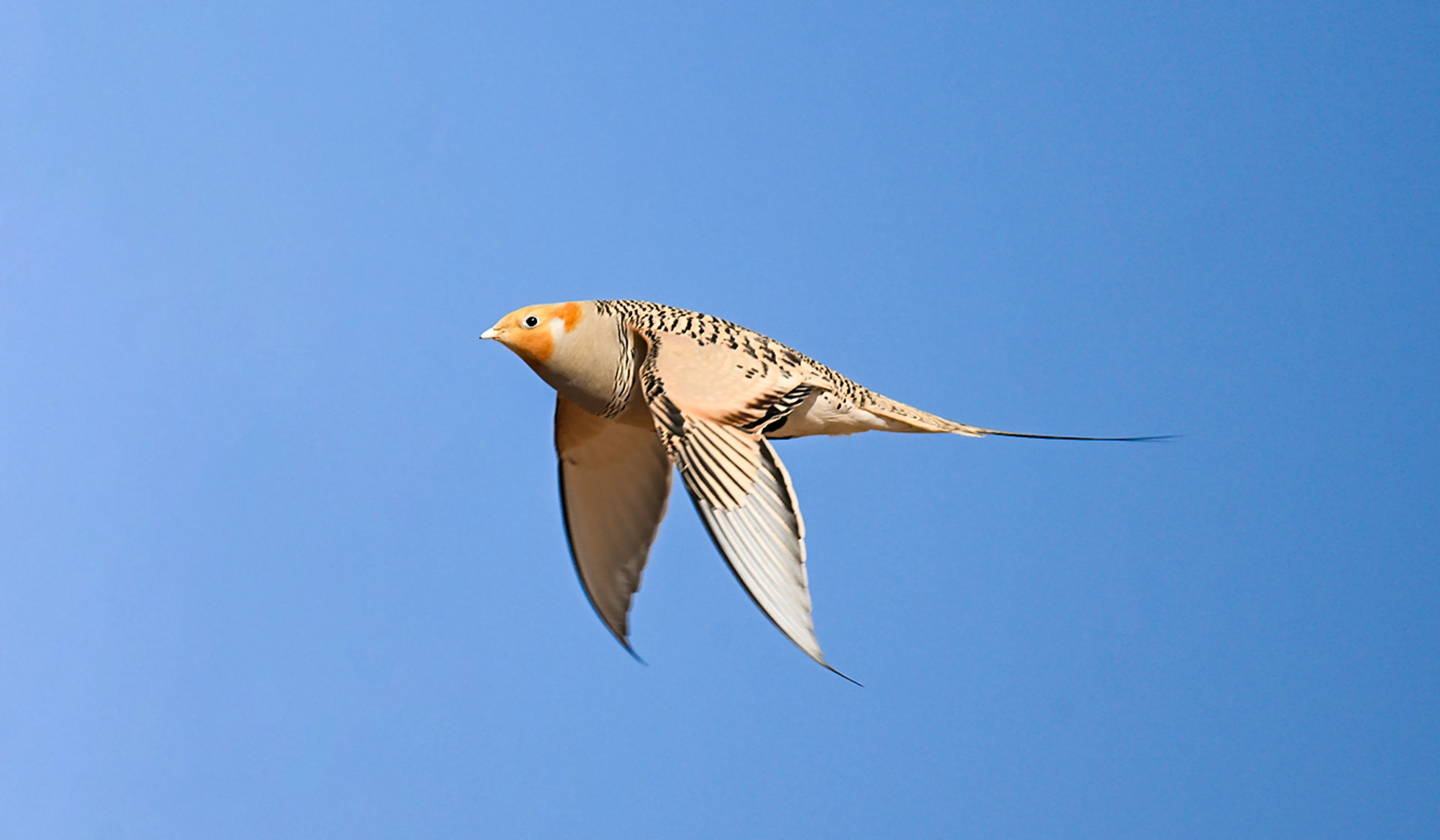
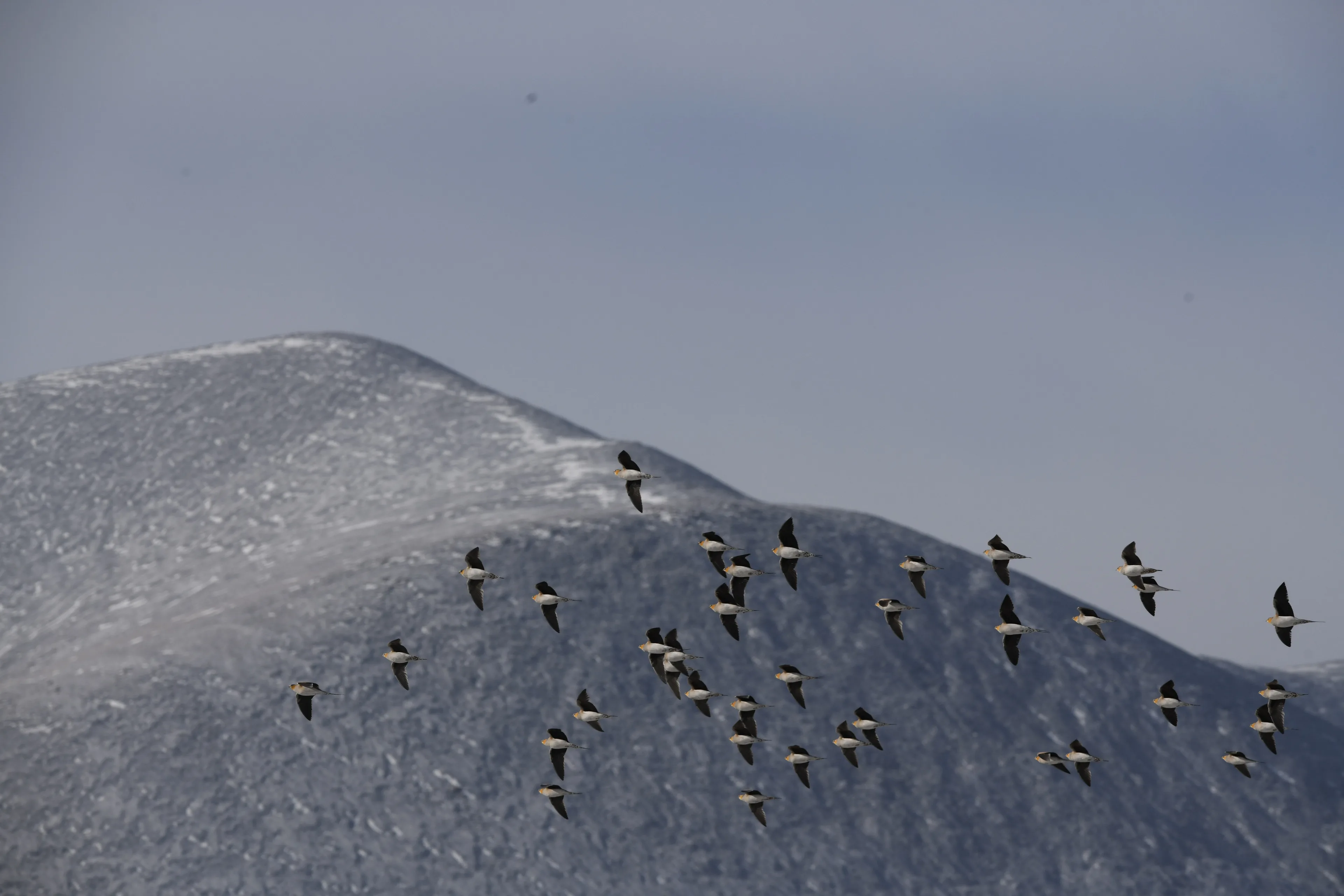
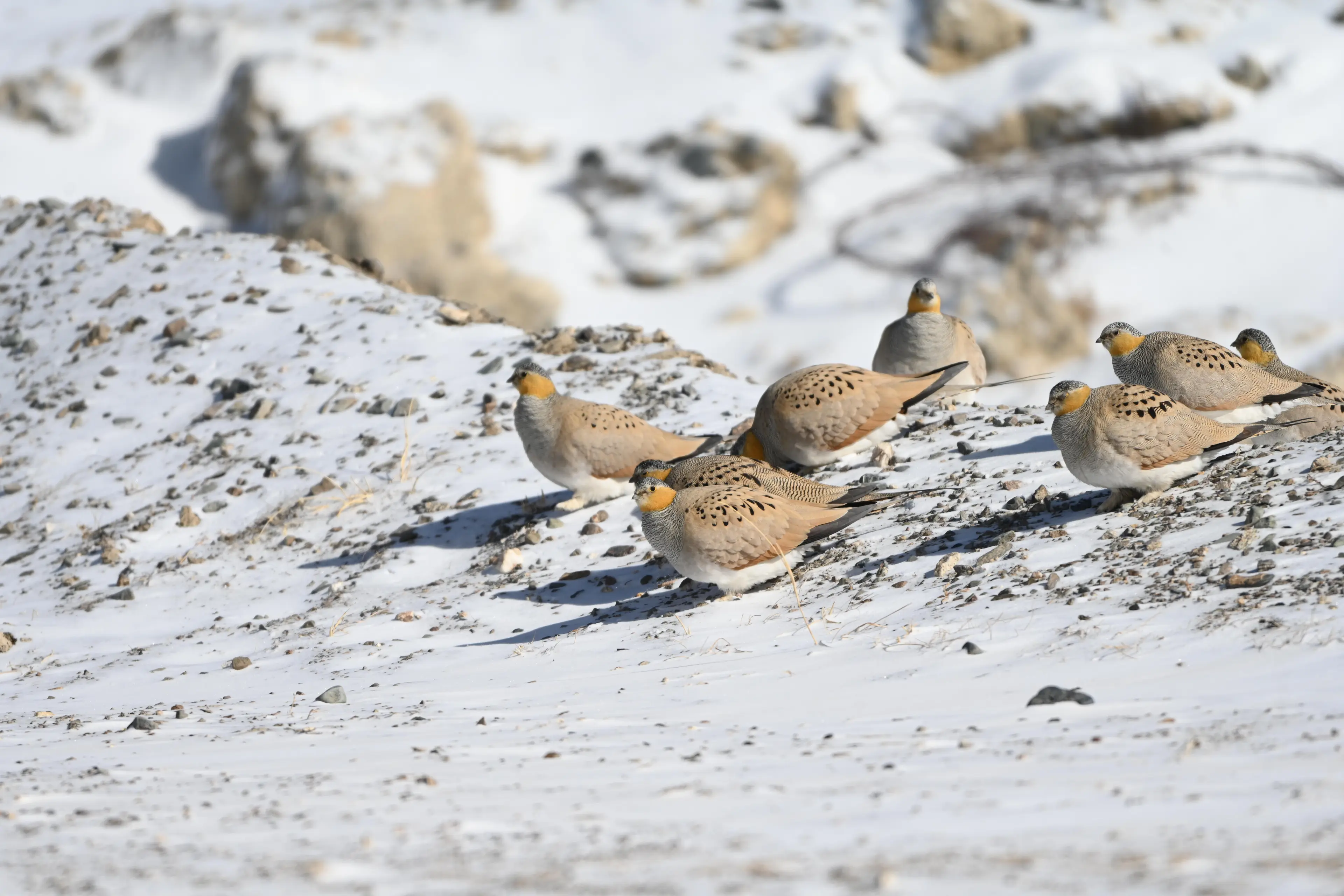
Then a flock of Tibetan Sandgrouse appeared. Against gravel and dry grass they can almost disappear, but the snow changed everything. Their soft brown-grey plumage suddenly had a clean background, and the whole flock became easier to follow through the binoculars.
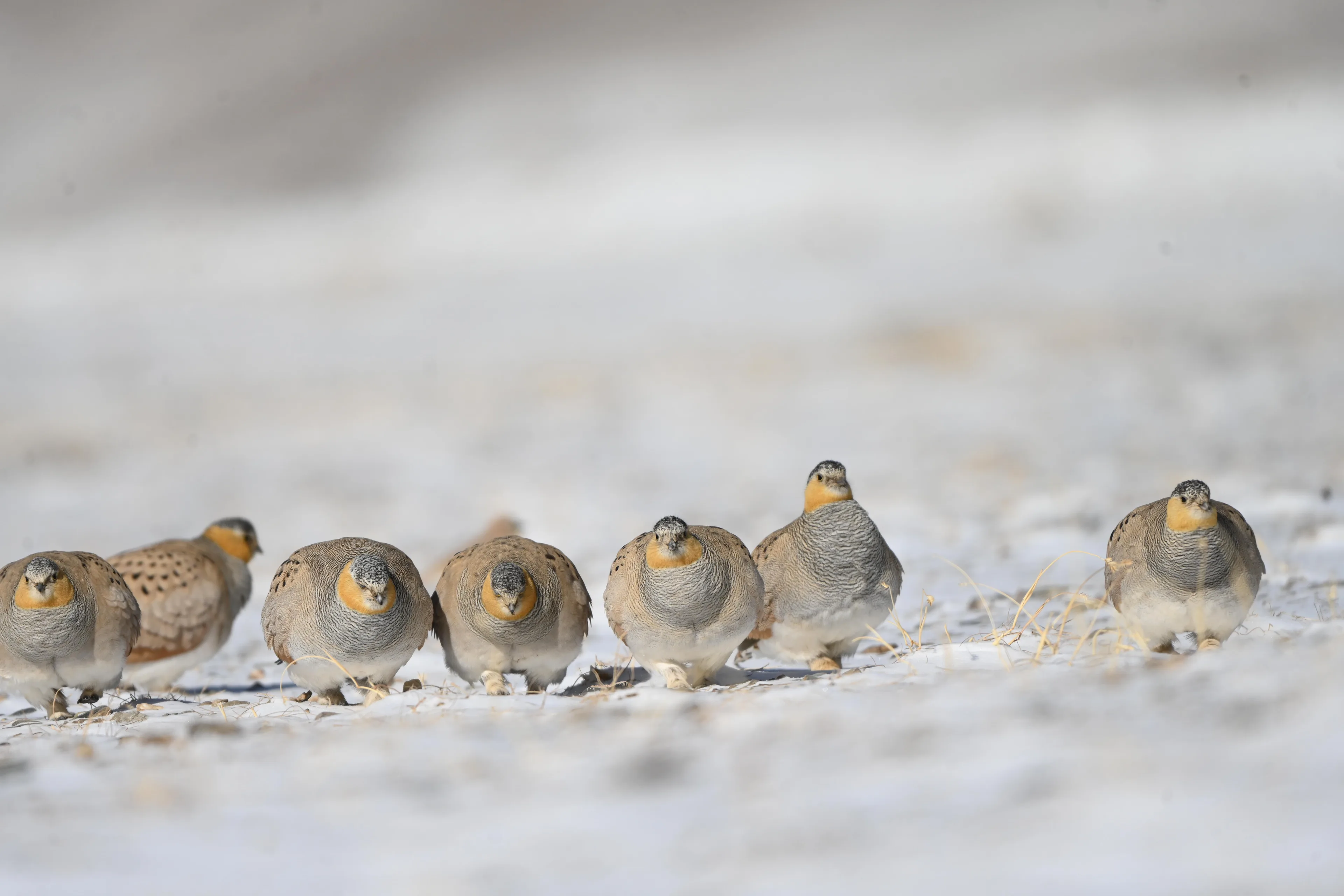
We did not try to close the distance quickly. On open ground, one careless approach can send birds much farther away than any lens can reach. So we stayed back, watched their direction and waited for them to settle into their own rhythm.
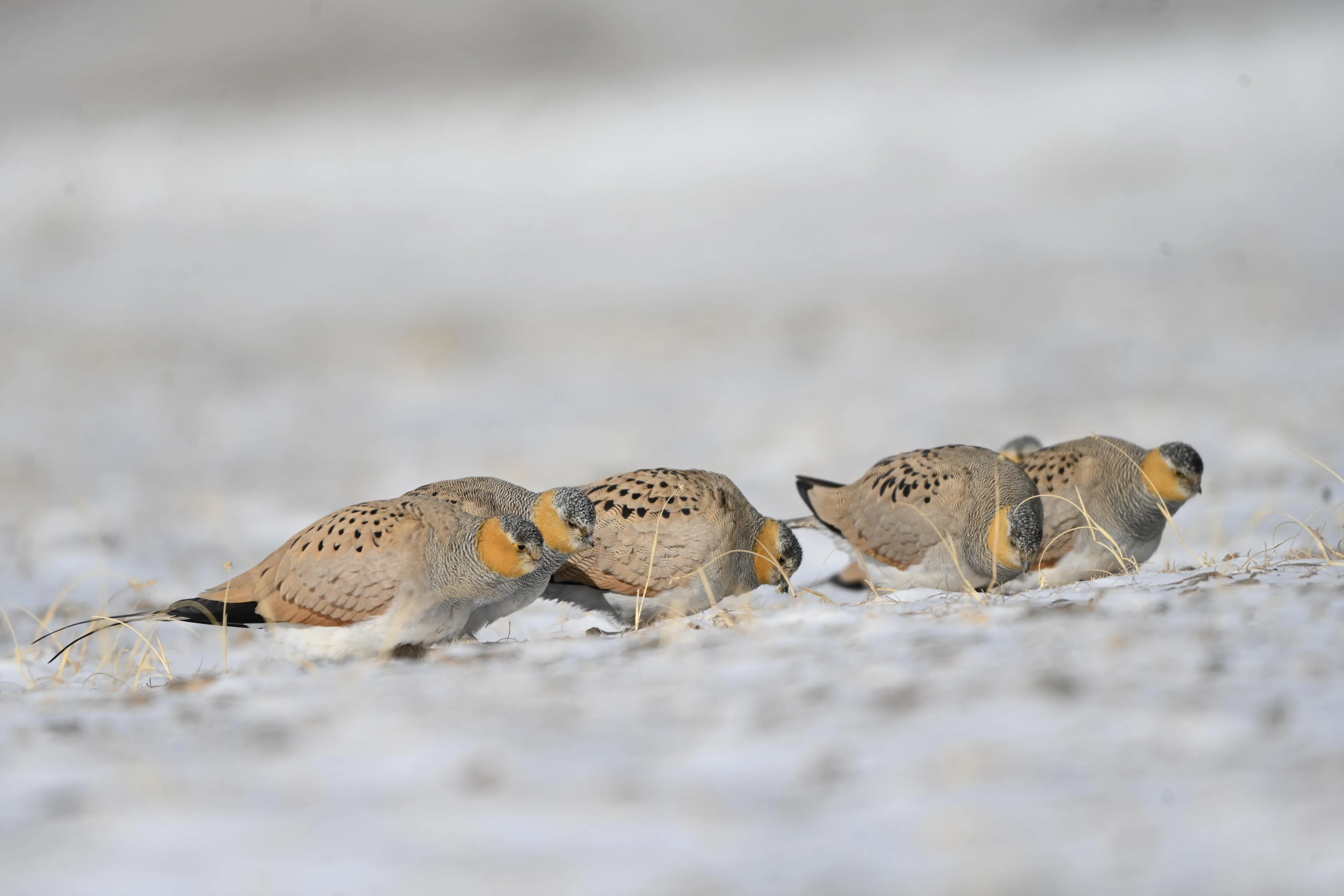
For a short while, the scene became exactly what we had hoped for: birds moving across white ground, wind blowing over the plateau and enough light to show both the flock and the harsh country they live in.
The photograph itself took only a fraction of a second. What we remember is everything around it—the scanning, the cold and the patience. That is often the real story behind a wildlife image.