Most people imagine tracking giant pandas as quietly following one animal through the forest.
In reality, it’s rarely that straightforward.
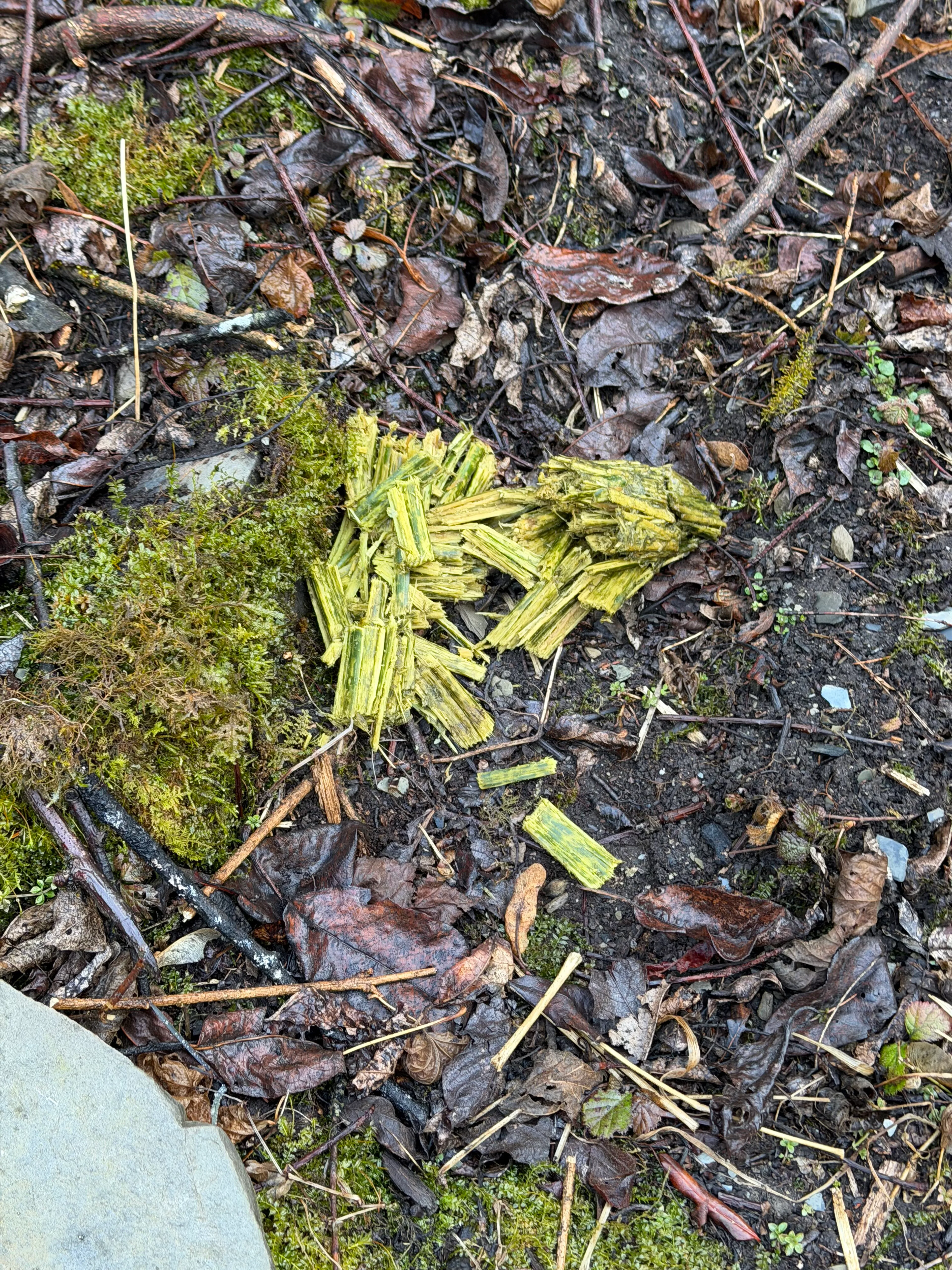
A day of panda tracking is spent reading the forest—looking for fresh bamboo feeding sites, footprints, claw marks and scat, trying to piece together where a panda has been and where it might go next. Success depends as much on patience as it does on luck. On this particular day, we were following a narrow trail beside a mountain creek deep in giant panda habitat.
Before long, we found exactly that: fresh giant panda scat near the water.
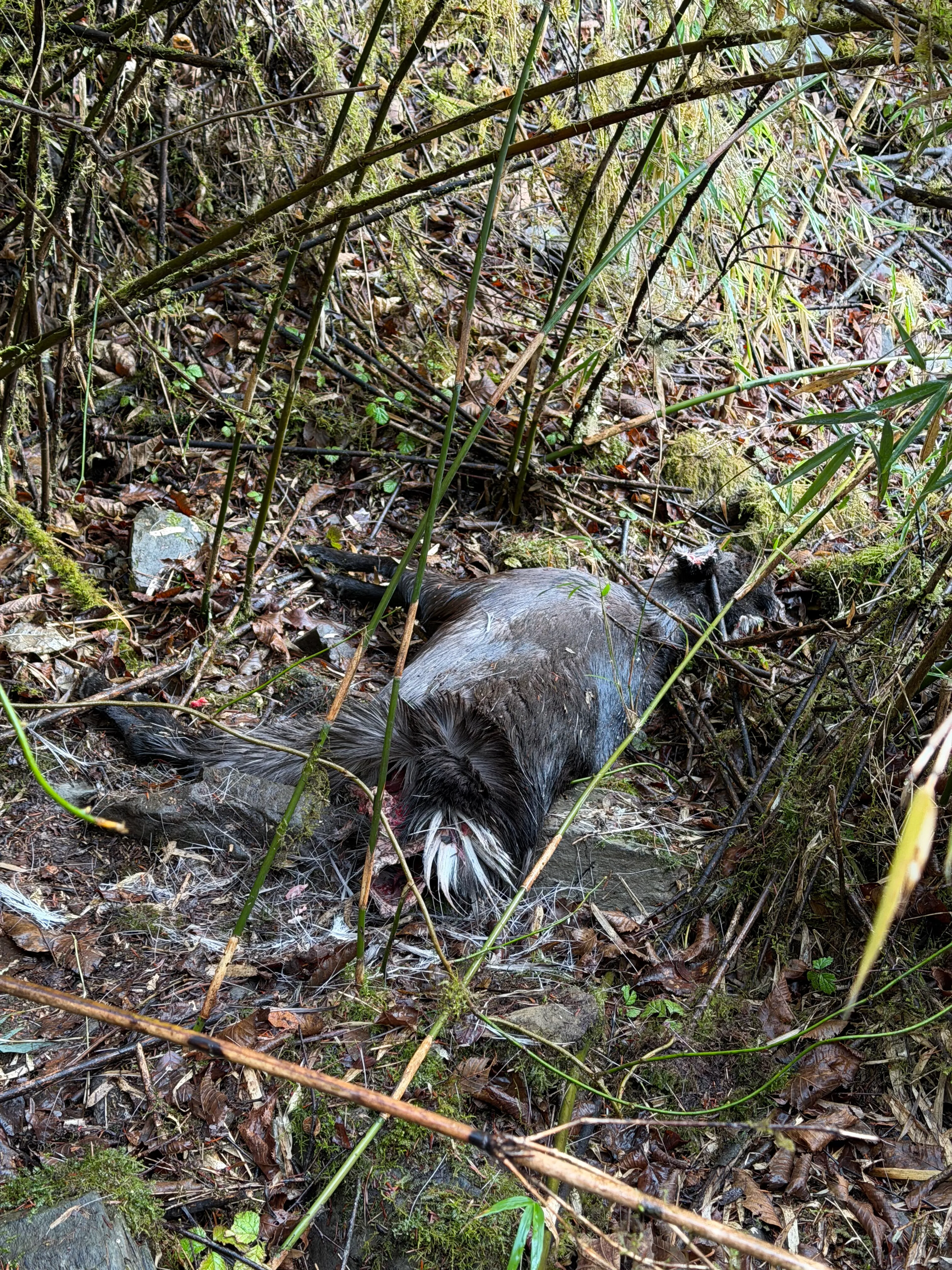
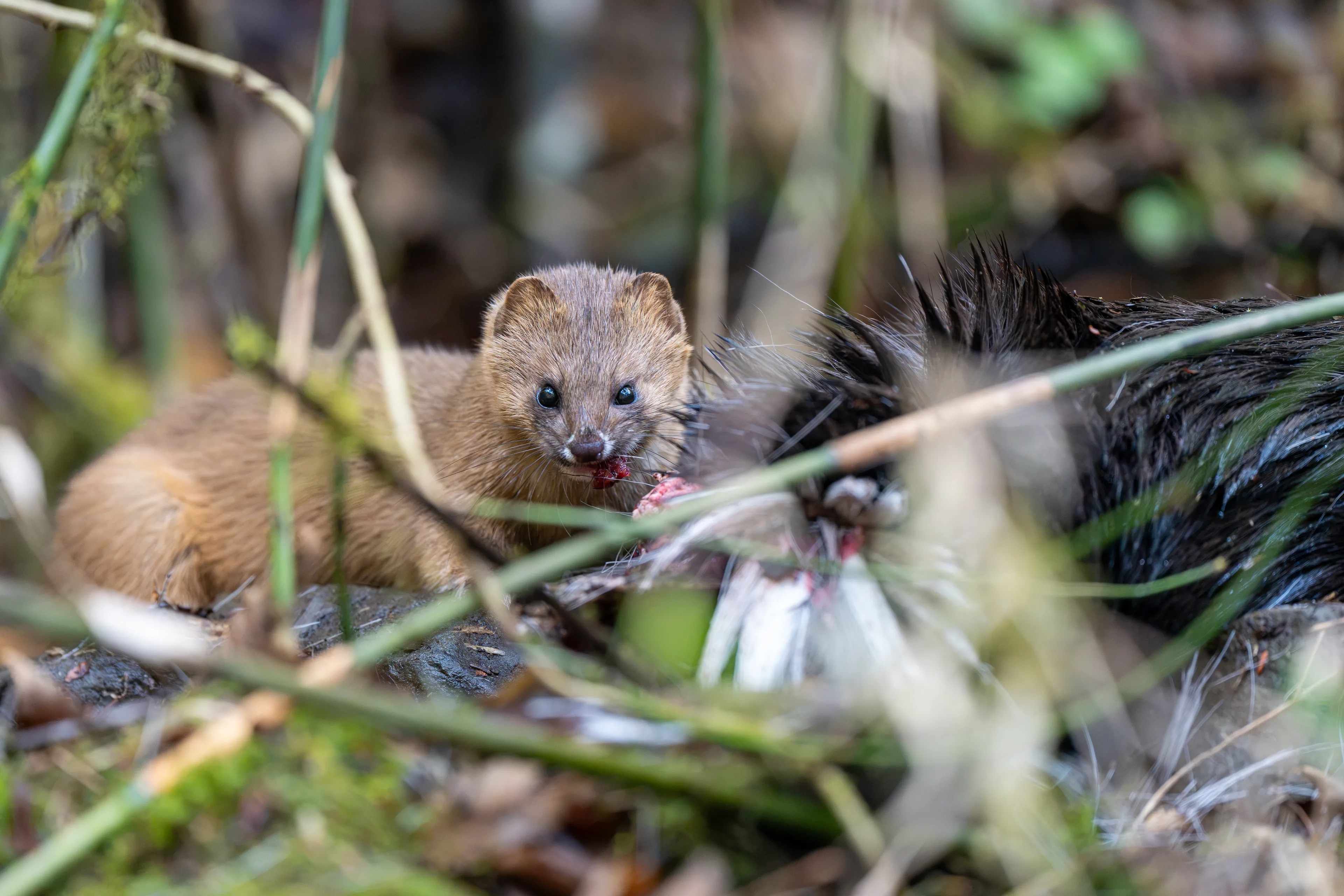
A short distance farther on, we came across something much more unexpected—a relatively fresh Chinese goral carcass. What had killed it was unclear. Bite marks around the rear made us wonder whether a yellow-throated marten had been involved, but there was no way to know for certain.
With fresh panda sign nearby, a creek running through the valley, and now a carcass that might attract wildlife, it seemed like a good place to wait. We set up our tripods and watched the forest, hoping the panda might come down toward the creek or investigate the carcass.
The first visitor was not a panda.
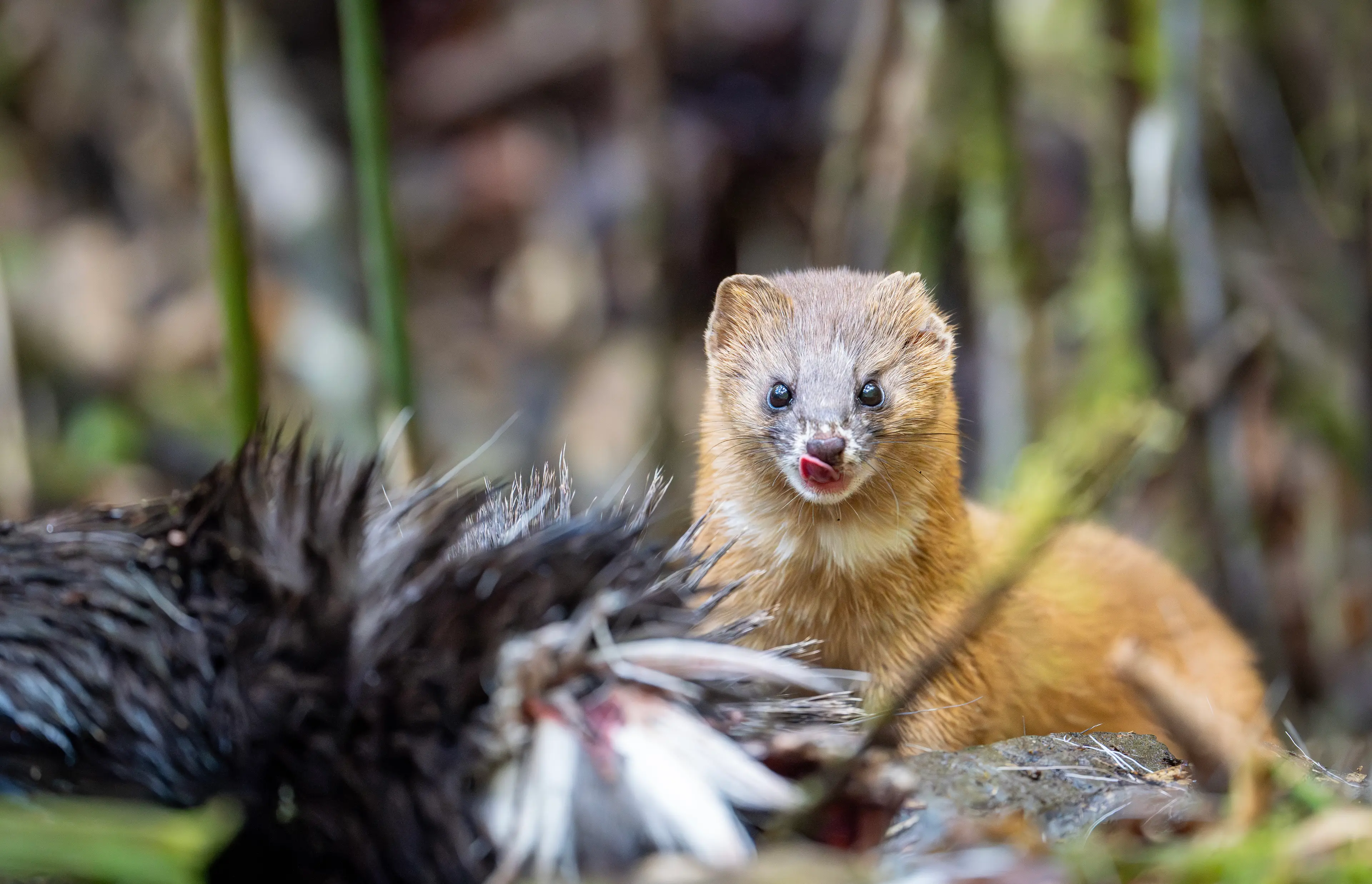
A Siberian weasel appeared cautiously from the vegetation, took a couple of quick bites from the carcass, and disappeared again.
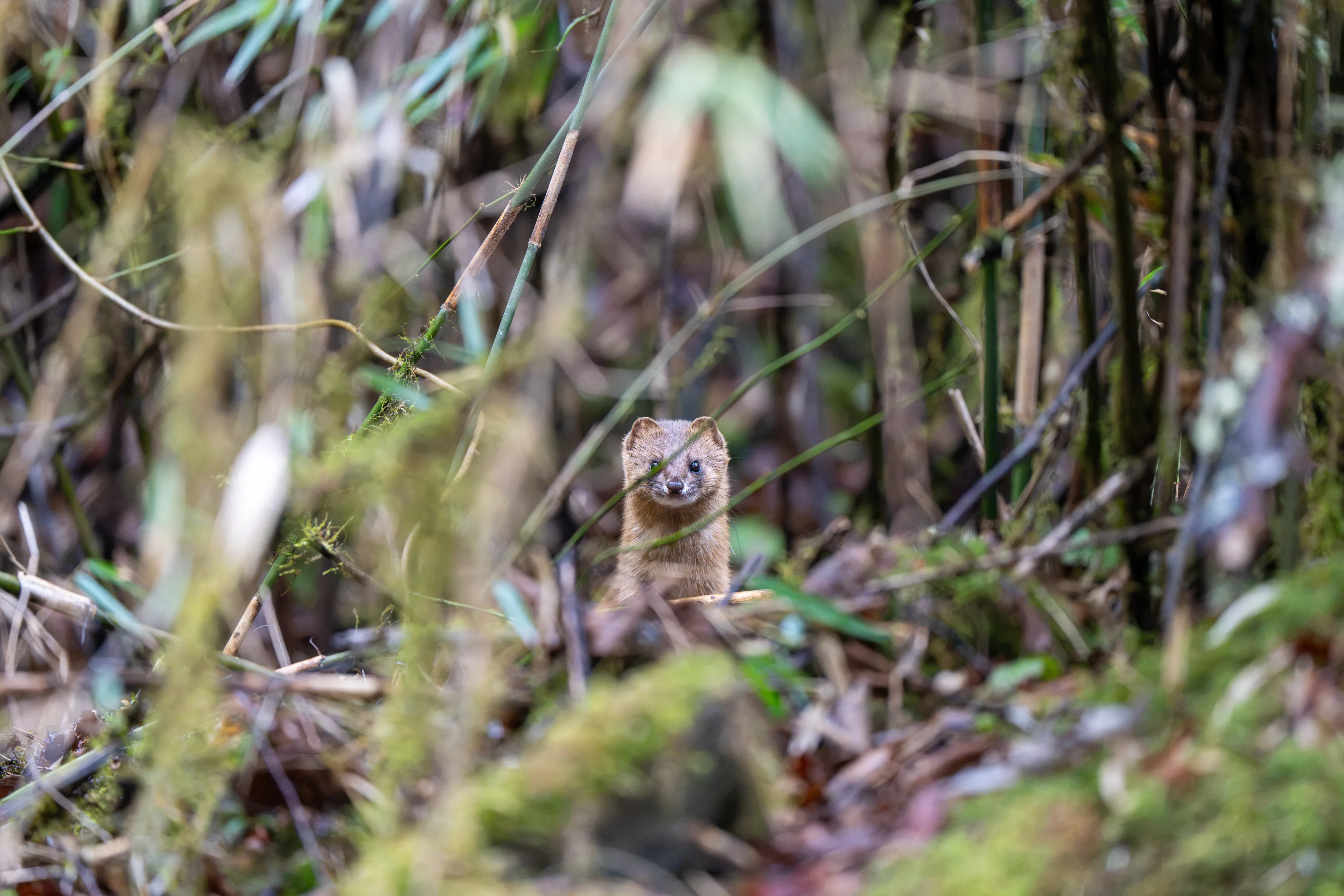
We stayed where we were, and before long it returned. Then it came back again. With each visit, it seemed a little less wary than before.
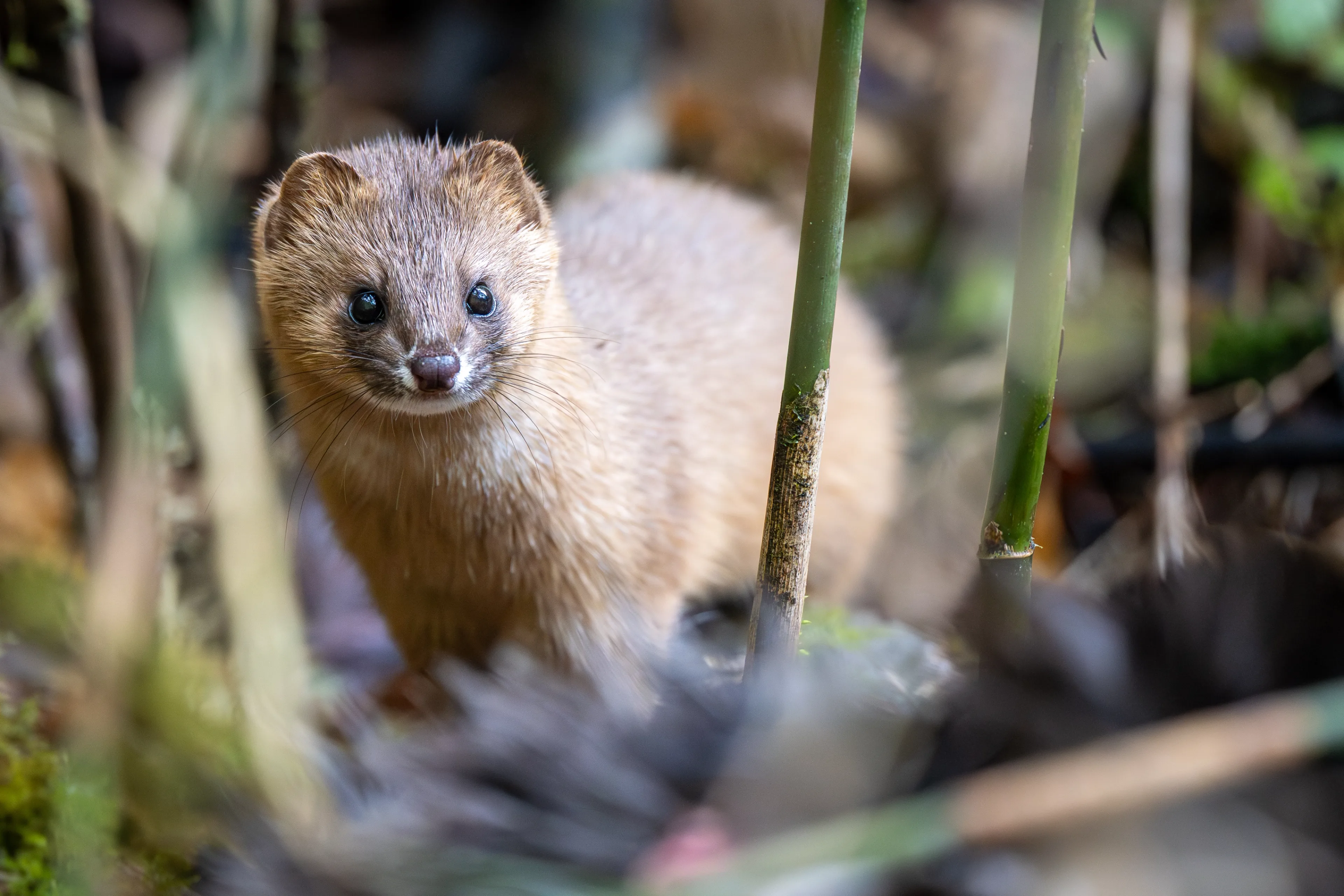
As the afternoon went on, the weasel became noticeably bolder, feeding at the carcass several times and giving us the chance to spend quality time watching and photographing it.
The panda remained the reason we were there. The fresh scat beside the creek was a constant reminder that one had recently been moving through the area, while the weasel gave us an encounter we could never have planned.
Near dusk, we packed up and began hiking back.
Then the forest had one more surprise for us.
Near the river, we spotted a red panda trying to cross the water. It wasn’t exactly graceful—for much of the encounter we were looking at its backside as it awkwardly struggled through the current.
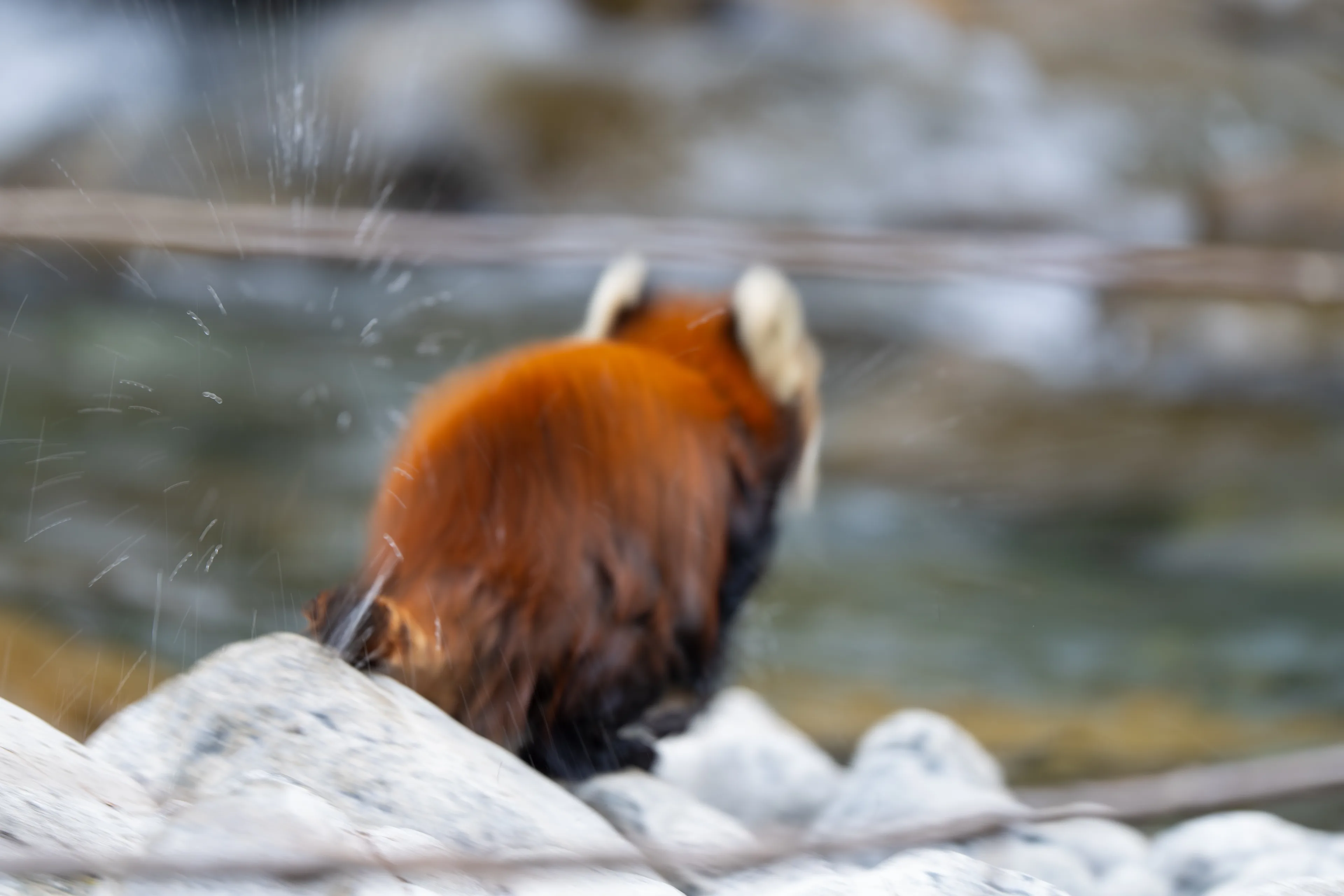
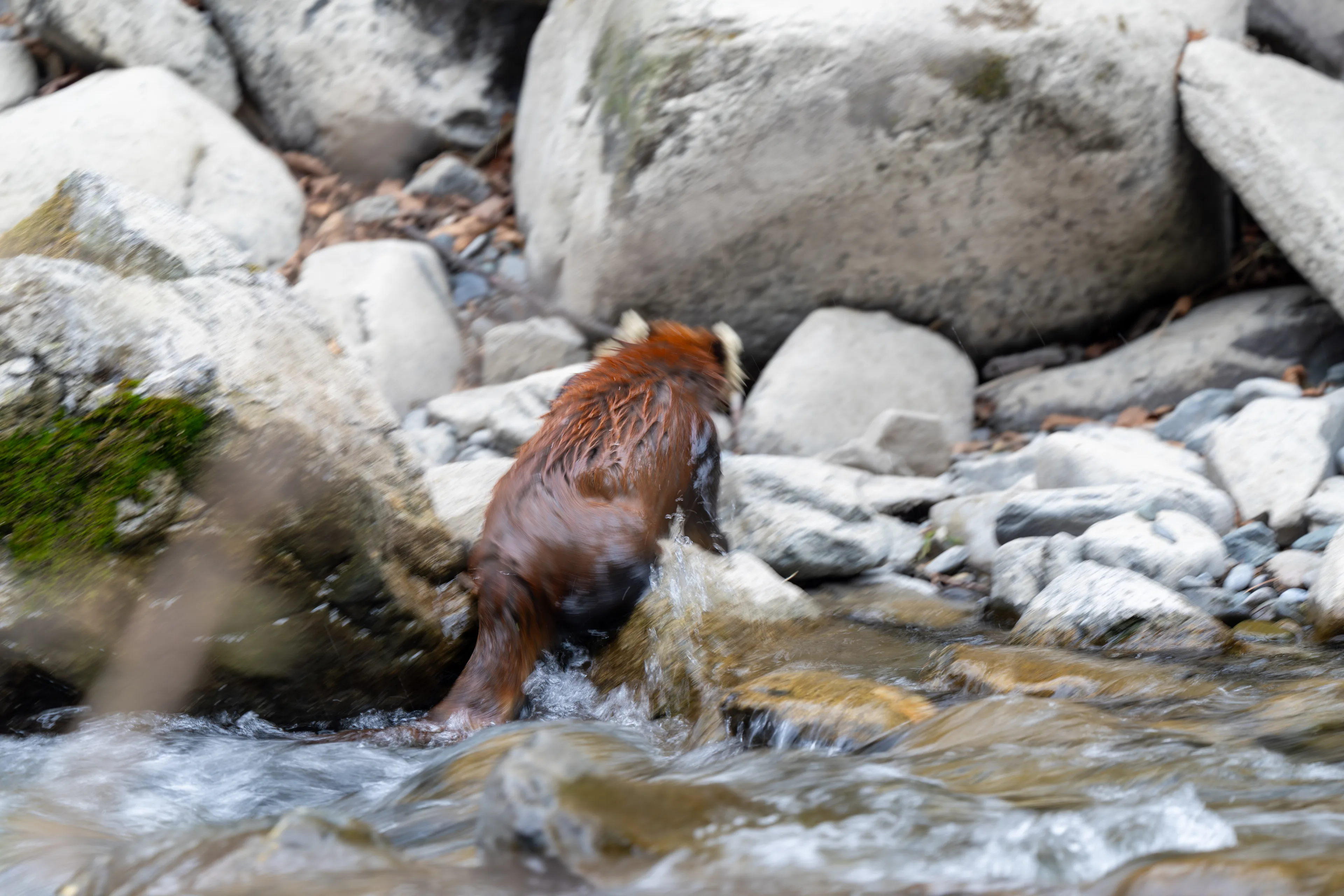
It was funny, slightly chaotic, and the perfect ending to a day that had already gone in directions we never expected.
That is the thing about tracking giant pandas in the wild.
The panda is always the focus, but following its signs means spending time inside an entire mountain ecosystem.
And you never really know what you’re going to find.