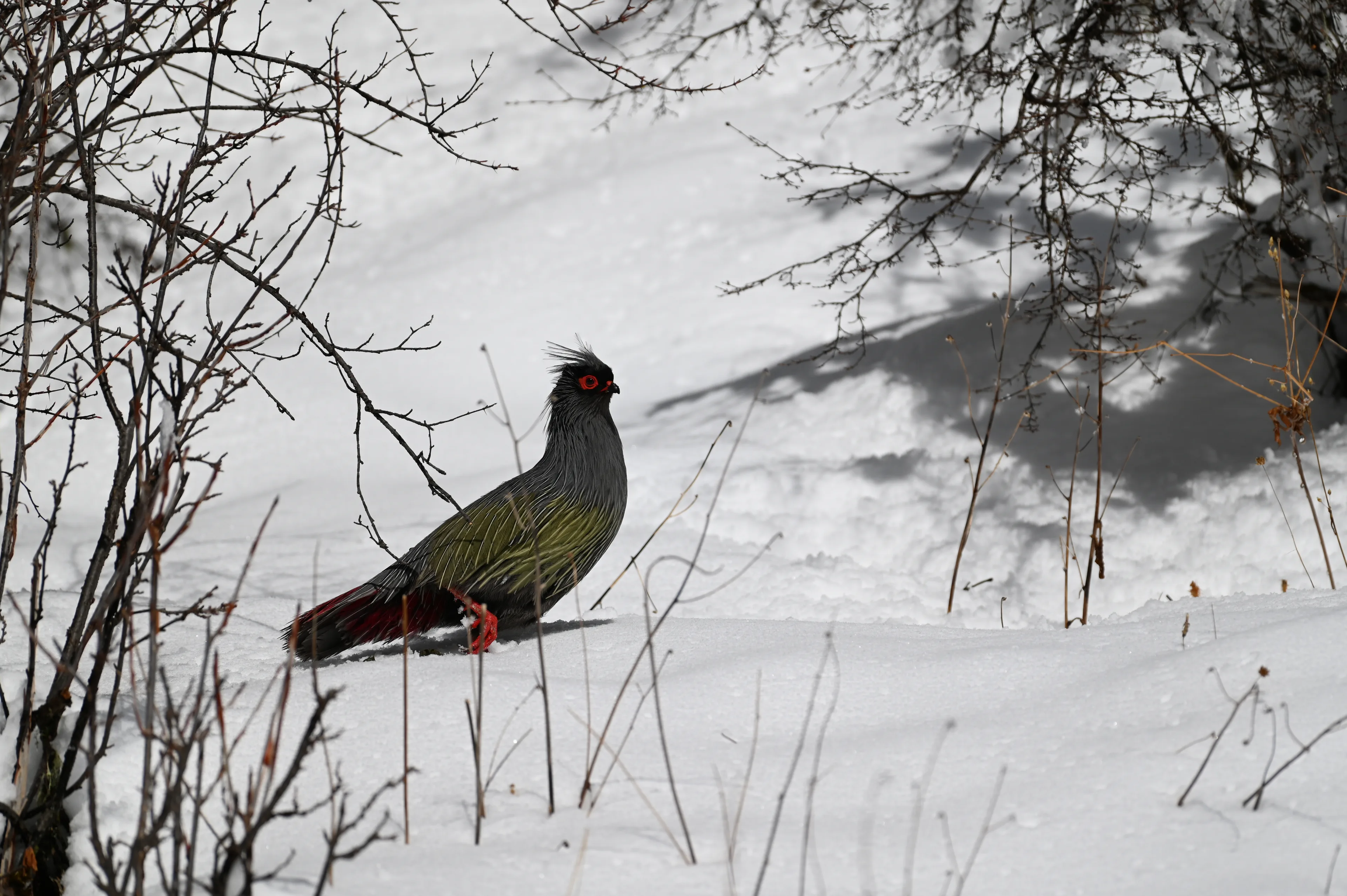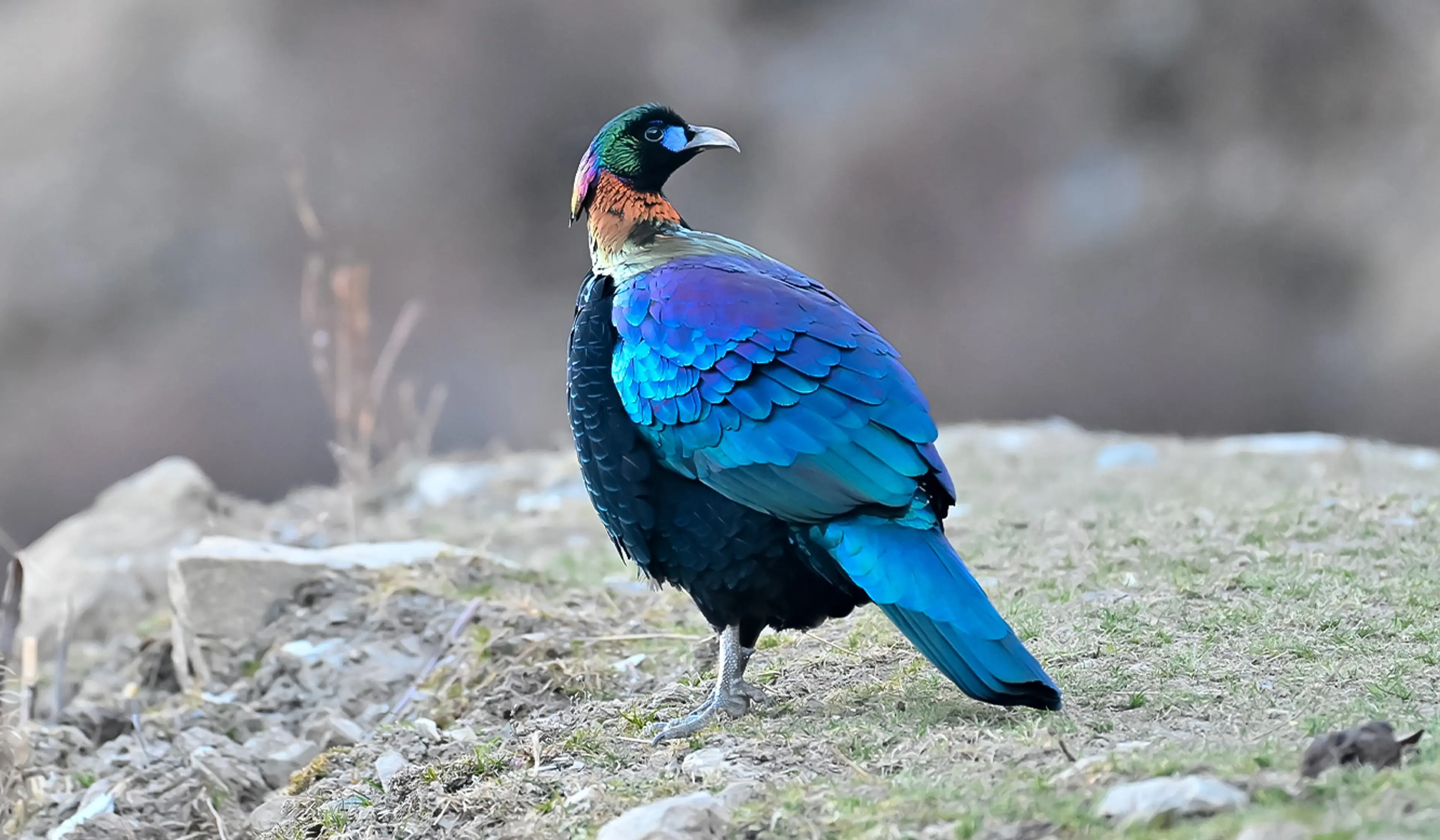
Autumn in western Sichuan has a different kind of light. The air feels sharper, the snow mountains seem closer, and the forests begin to lose the heavy green of summer.
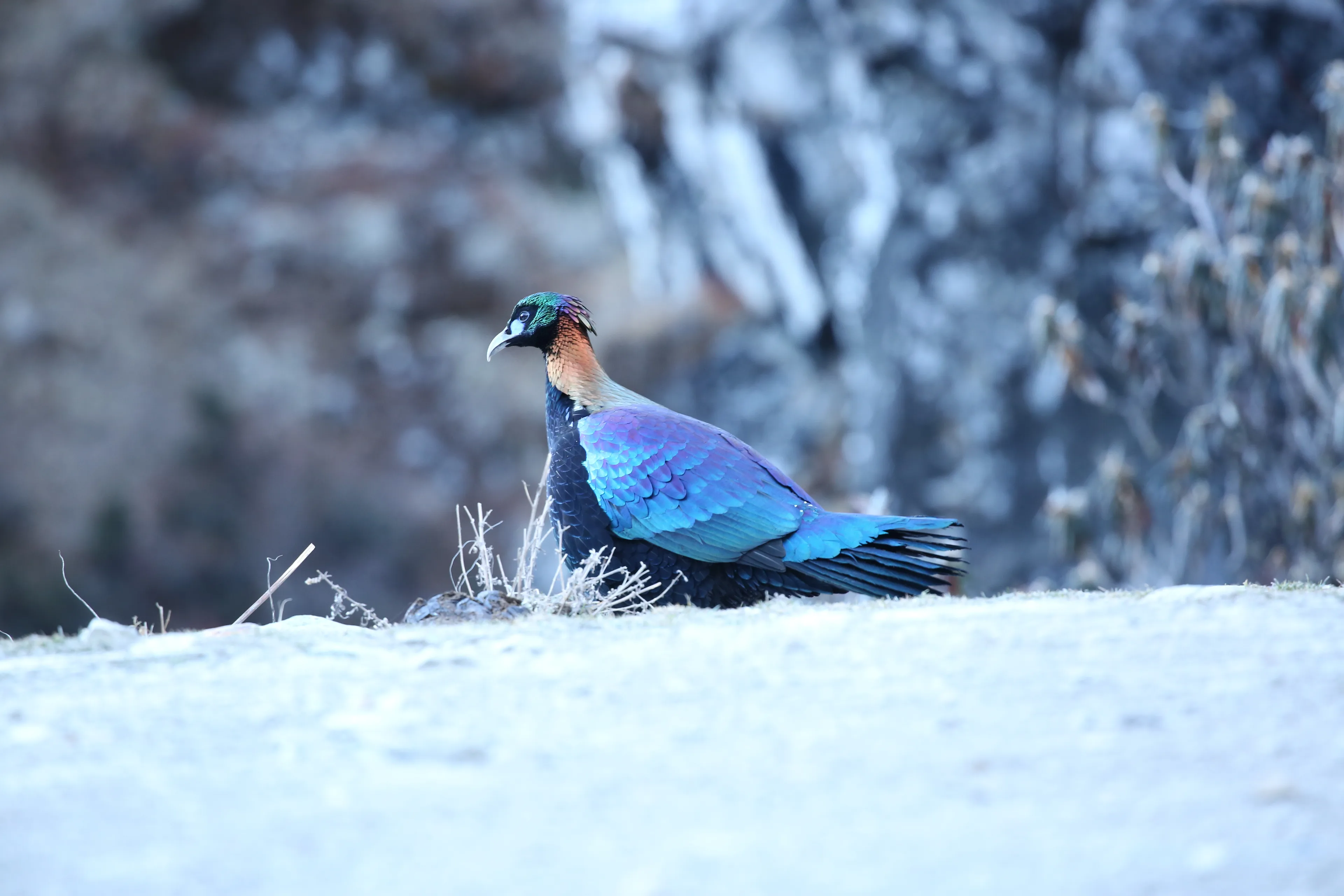
We spent our days moving with the elevation. In the lower forests, we listened as much as we looked. A short call from dense vegetation could stop us immediately. Higher up, the trees thinned and the search became more visual—open shrubs, rocky slopes and ridges where alpine birds use a completely different world.
The weather never let us become too confident. A sunny slope could be productive in the morning and quiet an hour later when cloud rolled in. Sometimes the best decision was simply to wait; sometimes it was to drop lower or climb higher.
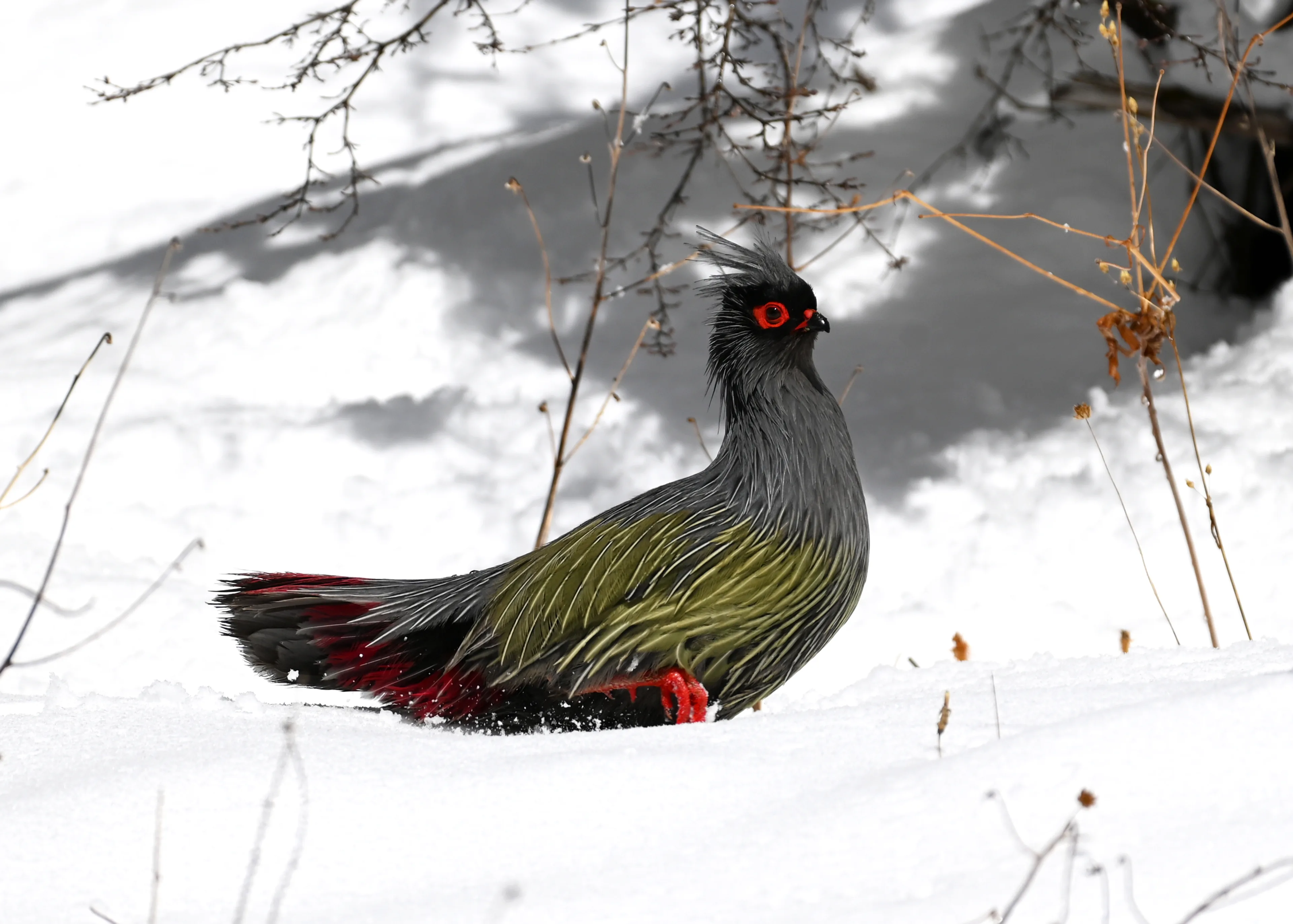
For photography, the temptation is always to fill the frame with the bird. But in these mountains we often preferred a wider view: a small bird on a wind-bent branch, with snow and rock behind it. The landscape explained the species better than a tight portrait could.
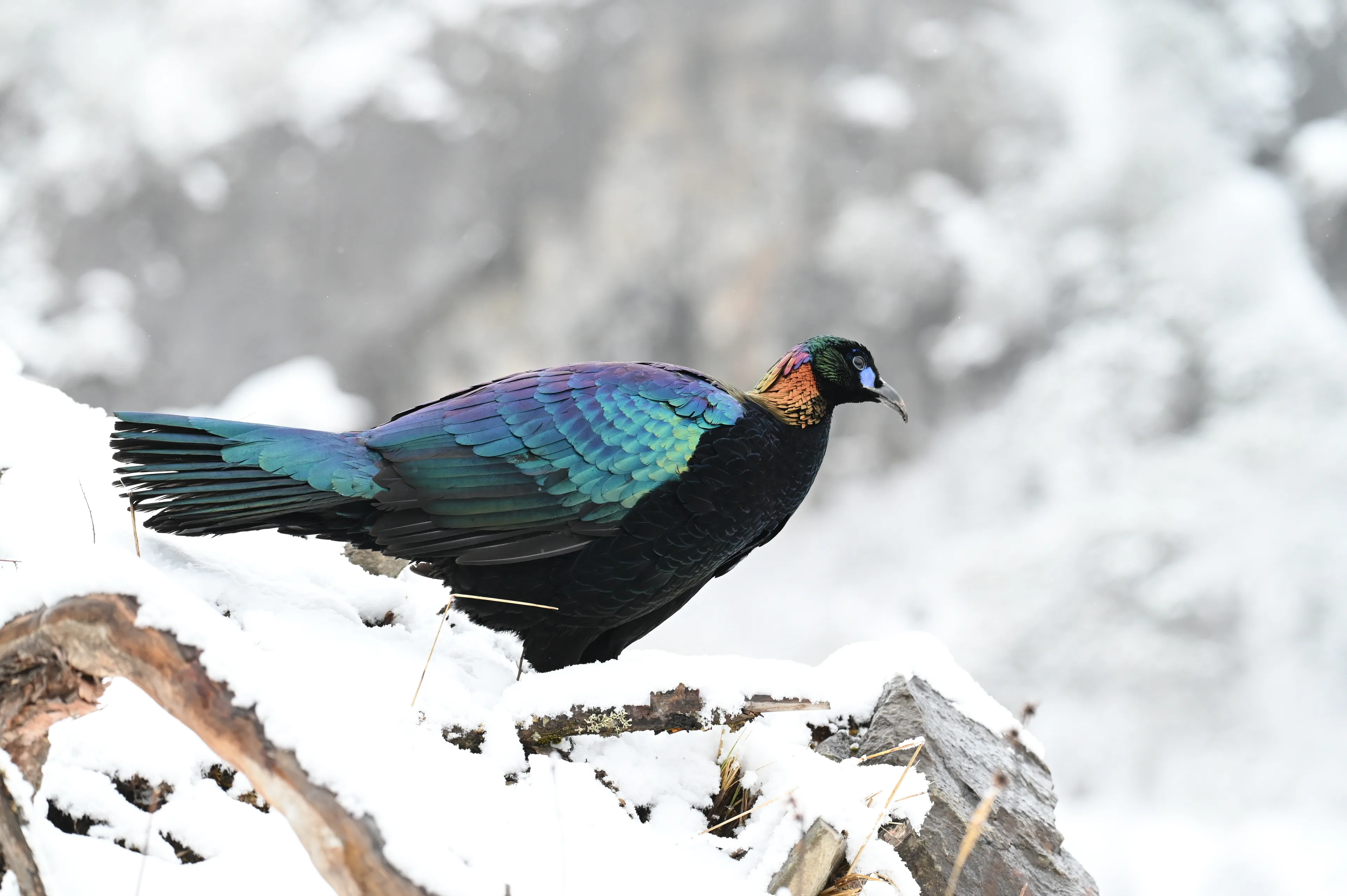
By the end of the trip, we had once again been reminded why we return to western Sichuan. The birds are the reason we start searching. The mountains are what make us want to stay.