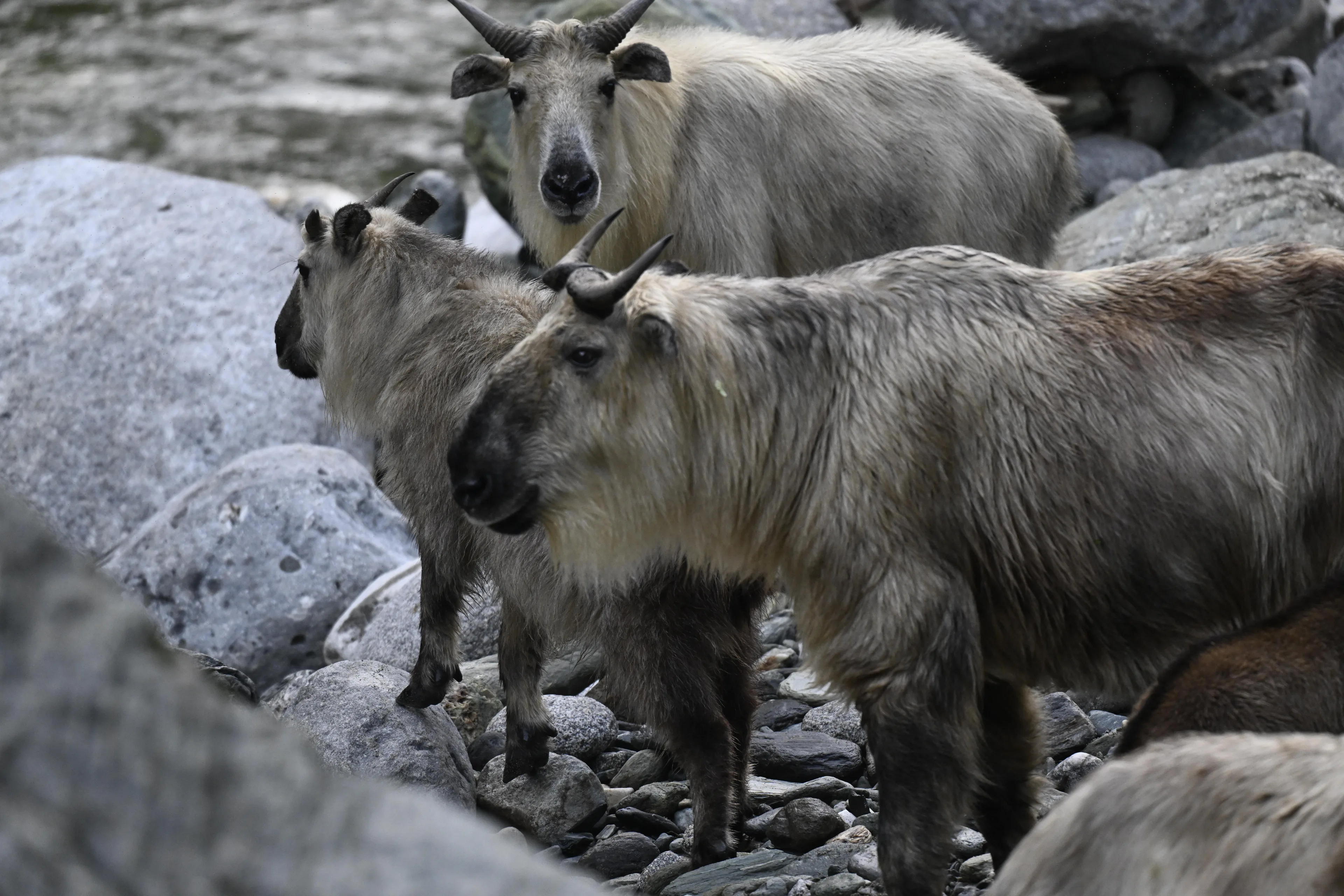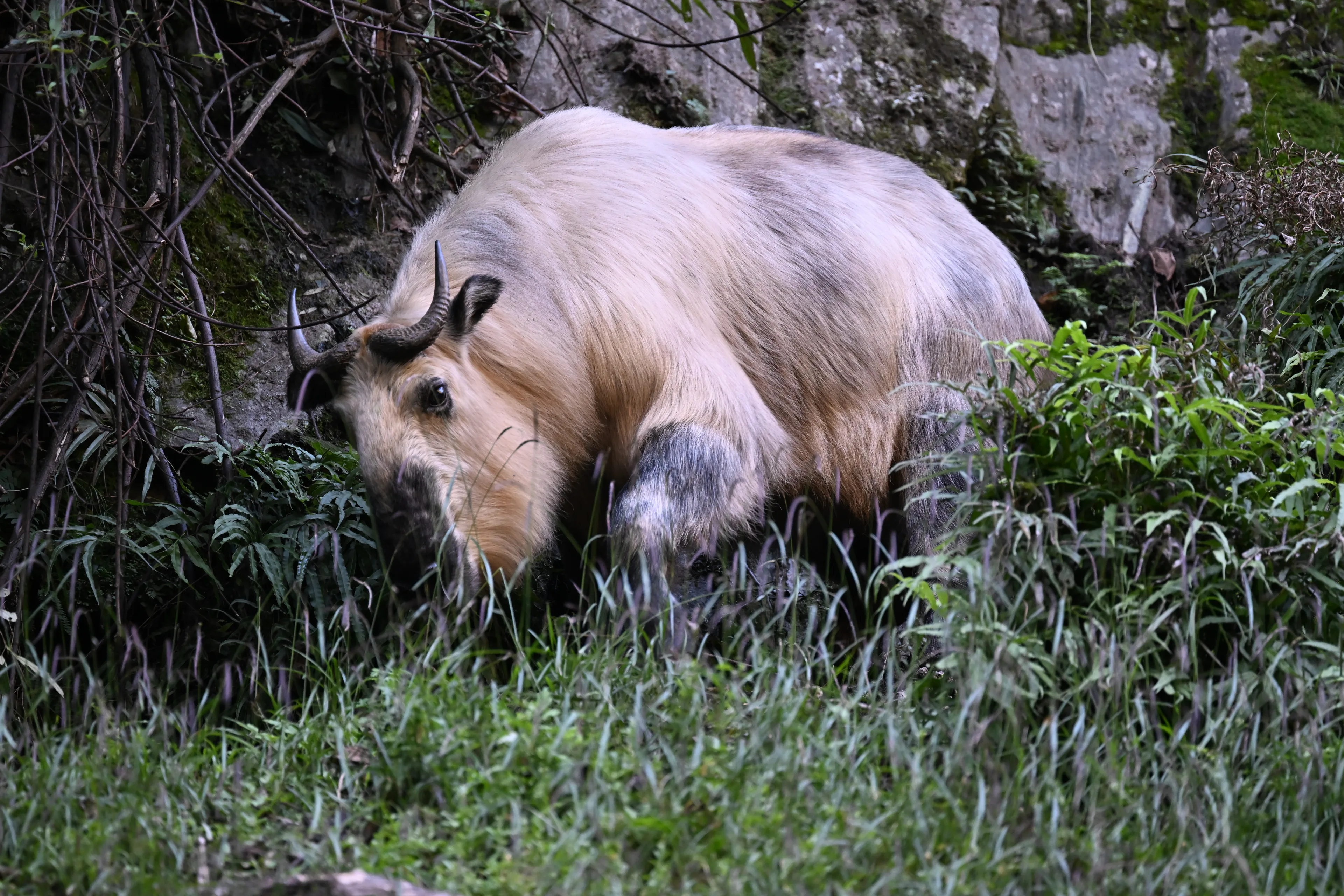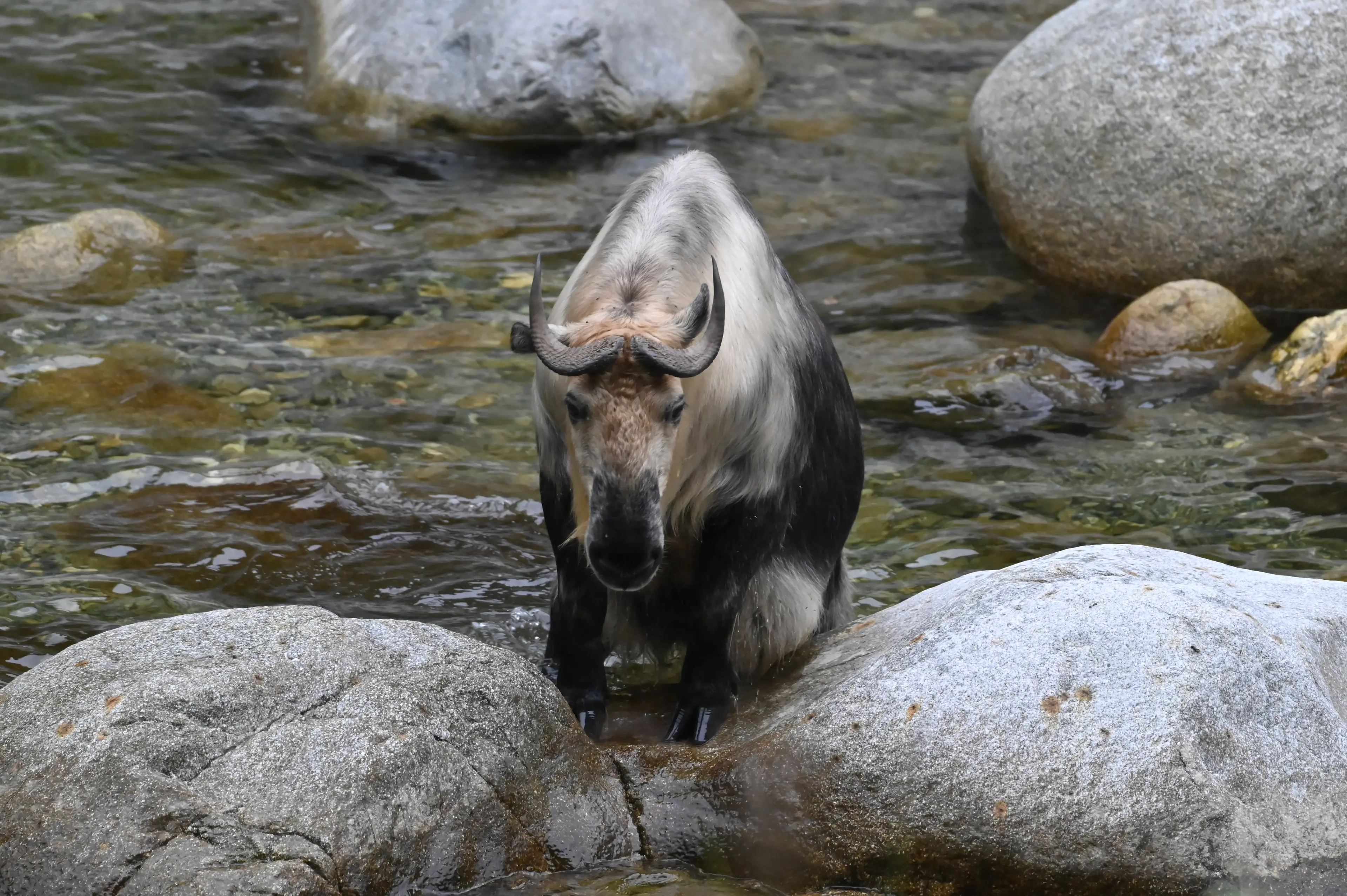
We had seen plenty of photographs of takins before arriving in Tangjiahe. None of them really prepared us for the scale of the animal in front of us.
The heavy body, thick coat and strong horns gave it a presence that was impossible to miss. Through the lens, the expression looked calm—almost curious—but we never treated that calm as an invitation to move closer.
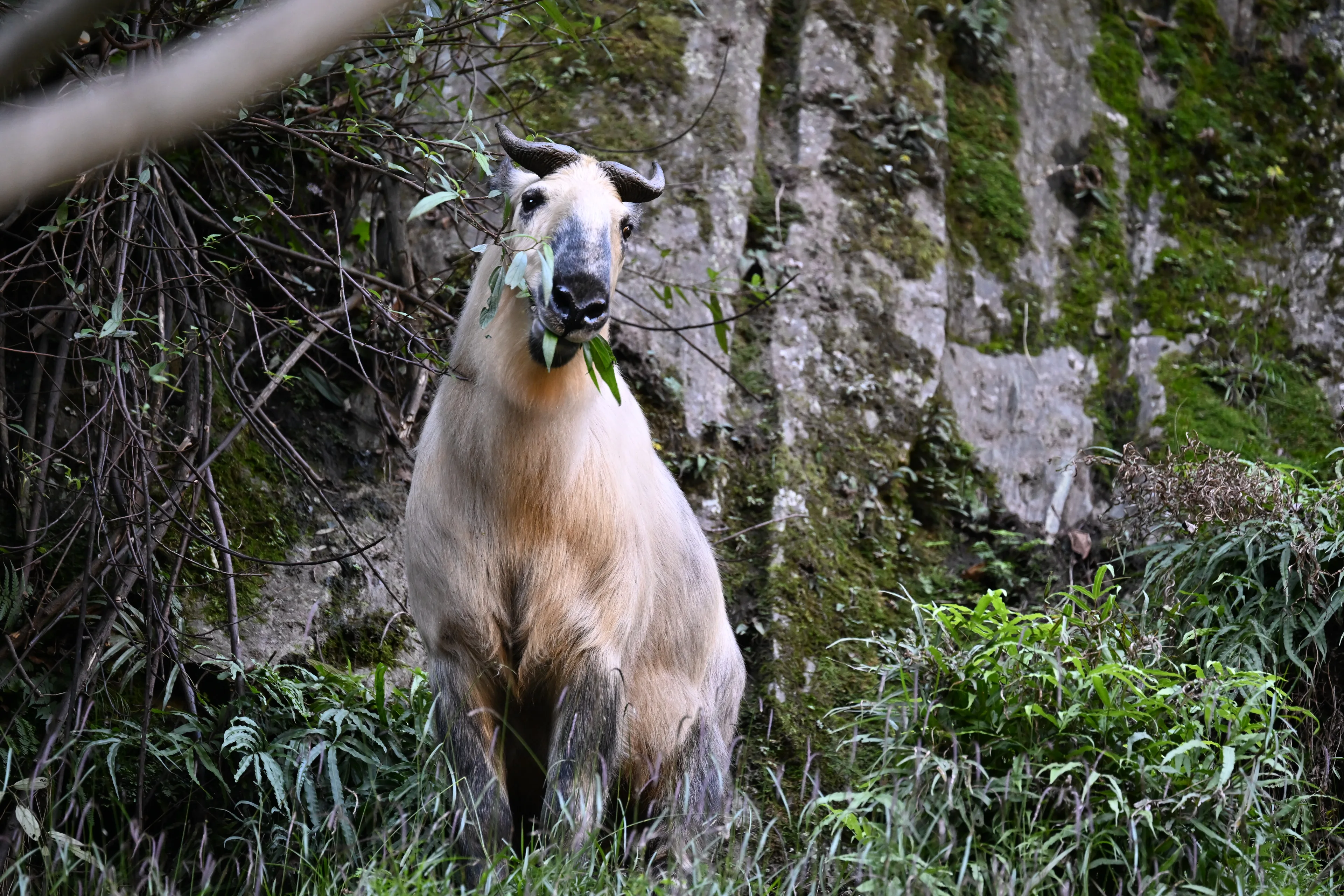
We stopped where we were and gave the animal space. That is one of the simplest rules in wildlife photography, especially with a large wild ungulate: if the animal has a clear route to leave, keep it that way.
Tangjiahe is famous as giant panda habitat, but days here constantly remind us that the forest belongs to far more than one species. Takins are part of that wider mountain community, moving through forest and higher country with the seasons.
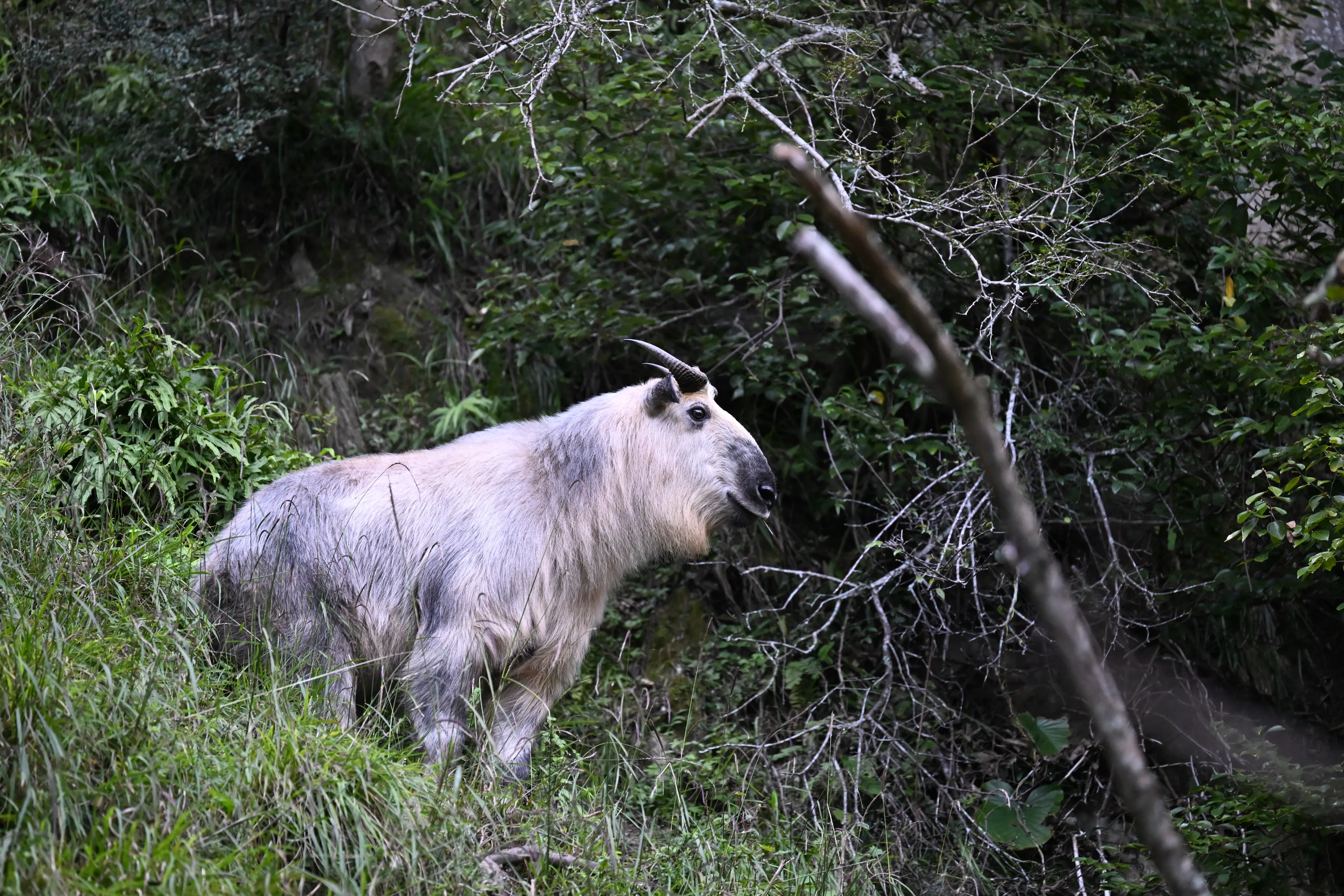
The strongest frame was not necessarily the closest one. What we liked most was seeing the takin as part of Tangjiahe—an animal with room around it, standing in the landscape rather than separated from it.
A few minutes later, the moment was over. That was enough. Wild encounters are often better when we let them stay brief.