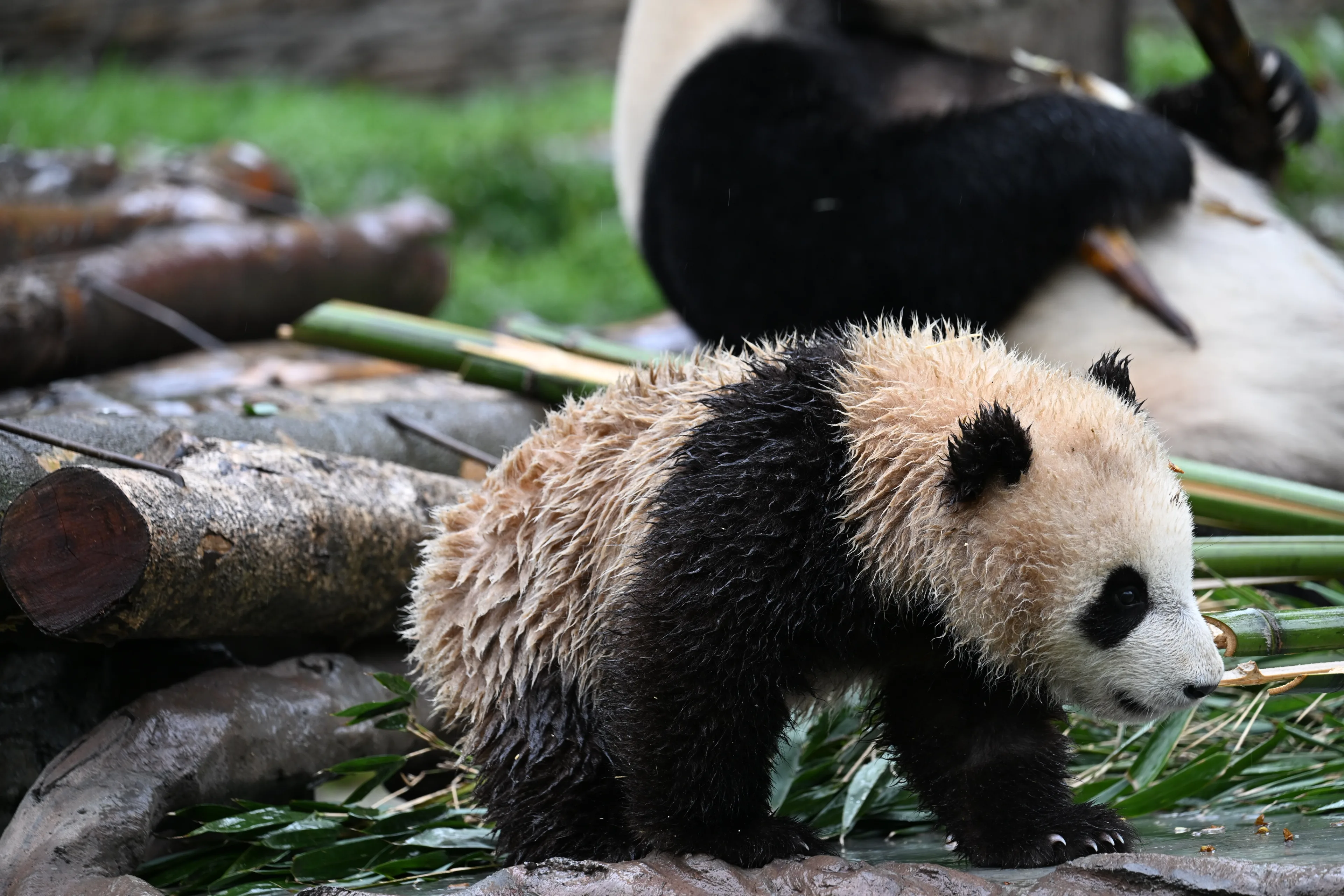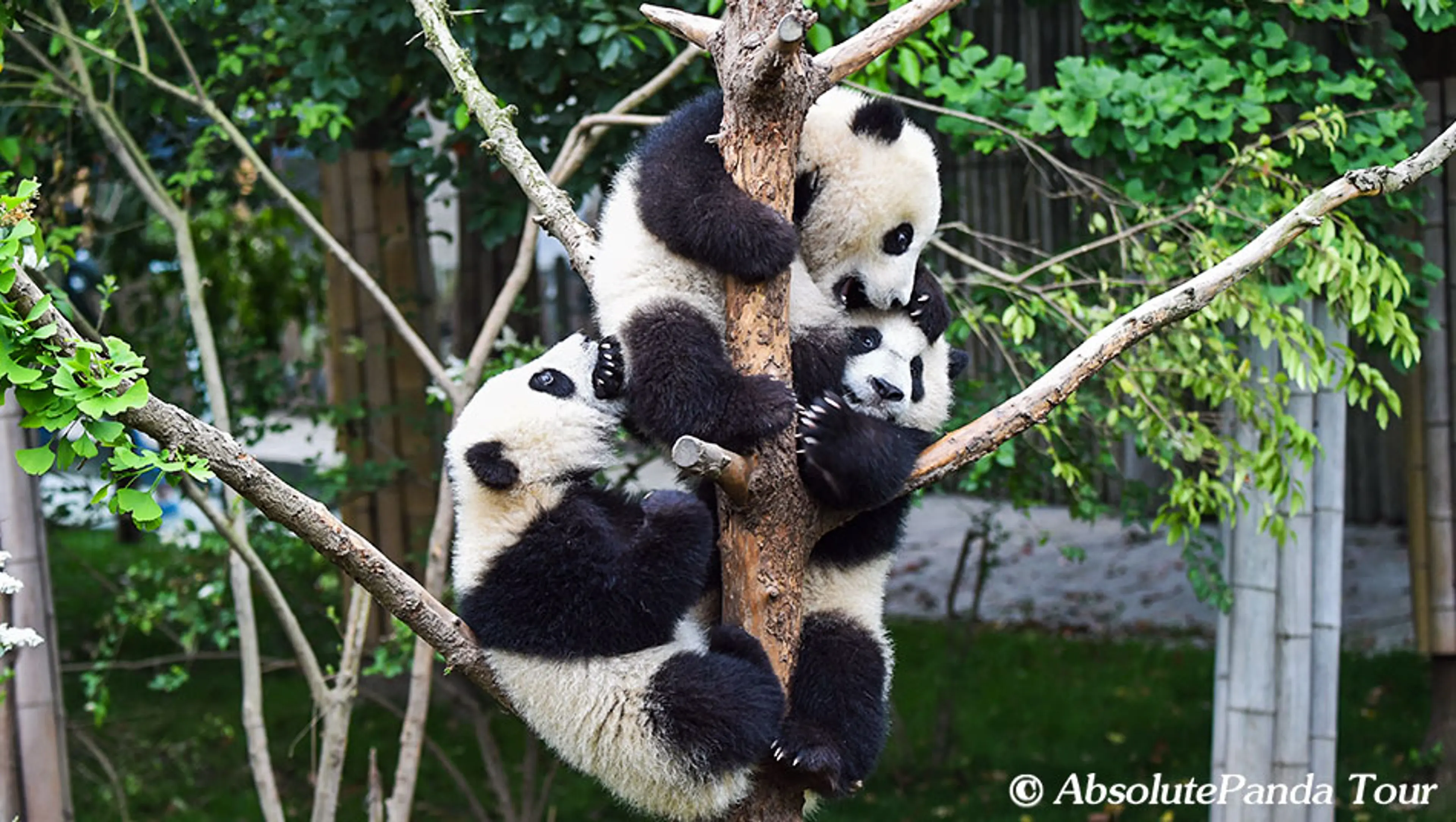
Most visitors to Chengdu meet the giant panda in a single morning.
We wanted to create something a little different.
Instead of visiting one panda base and moving on, this journey takes us gradually from the city into the mountains—following the story of giant pandas through several of Sichuan’s most important panda conservation areas.

We begin in Chengdu, where an early morning at Chengdu Panda Base gives us our first introduction. Mornings are usually the best time to visit: the temperature is cooler, pandas tend to be more active, and there is time to watch them feeding, climbing and occasionally playing before the day becomes busier.
From there, the journey slows down.

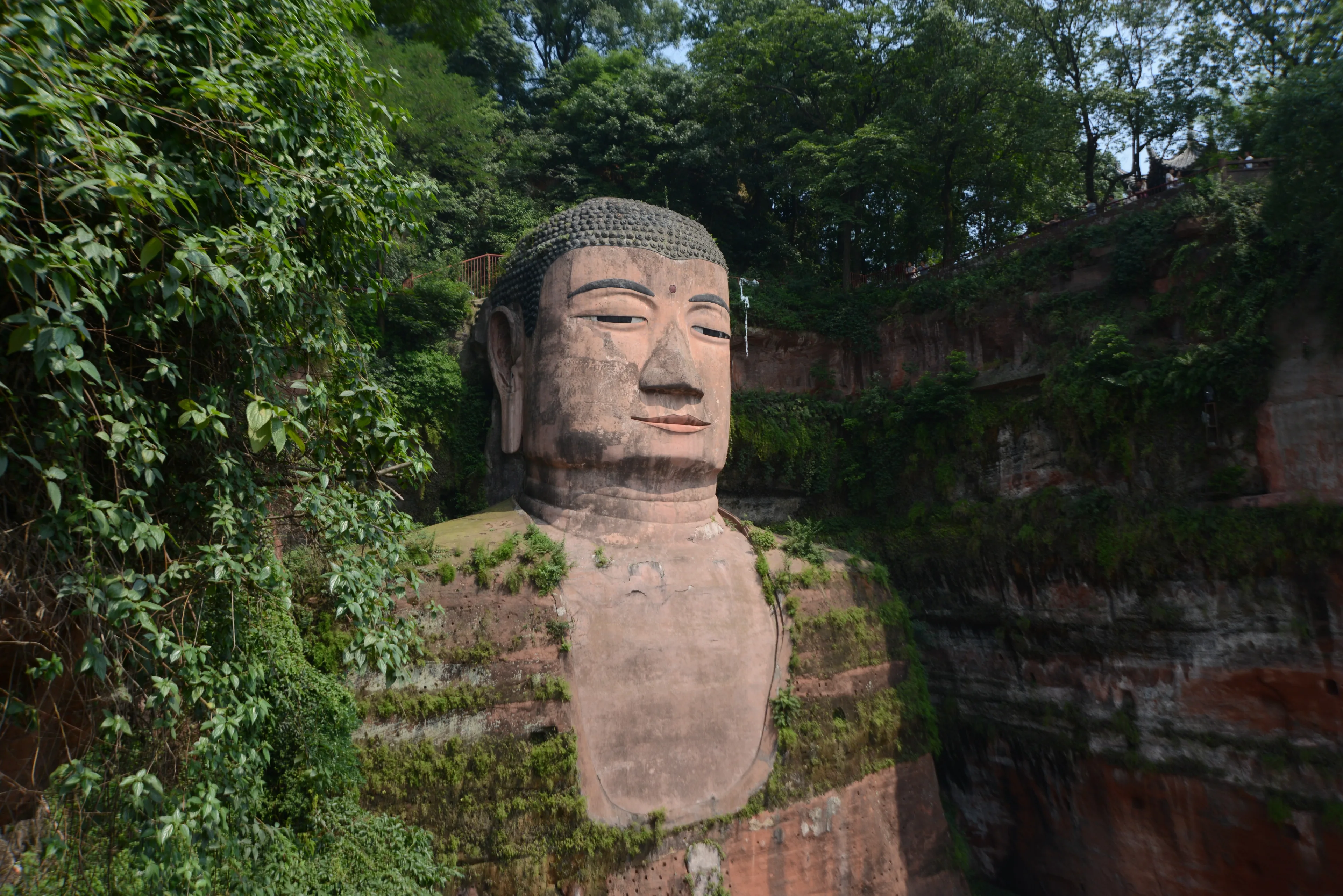
We travel south to Leshan, where the enormous Giant Buddha sits above the meeting of three rivers. It is a completely different side of Sichuan—less about wildlife and more about the history, landscape and Buddhist culture that have shaped this part of China for centuries.
Then we begin moving closer to panda country.
Into the Mountains
At Bifengxia, the atmosphere changes quickly.
The panda base sits among forested hills near Ya’an, and the surroundings feel greener and quieter than Chengdu. We combine our panda visit with an easy walk through Bifengxia Gorge, where streams, forest paths and steep valley walls make the landscape part of the experience rather than simply a backdrop.
The following day takes us deeper into western Sichuan.
Driving toward Wolong, the city gradually disappears behind us. Mountains close in, rivers run beside the road, and the scenery begins to resemble the natural environment that giant pandas have evolved in.
Wolong has played an important role in giant panda research and conservation for decades, but what we enjoy most here is the setting.

Seeing pandas surrounded by misty mountains and dense vegetation feels very different from seeing them in Chengdu.
Later, we return toward Dujiangyan and visit Panda Valley, where bamboo, woodland and streams create another perspective on panda conservation.
More Than Just Watching Pandas
On the sixth day, the experience becomes more hands-on.
Subject to the current operation of the program, we take part in the Dujiangyan Panda Volunteer Program.
Rather than simply walking past enclosures, the program offers a closer look at the daily work behind panda care. Activities may include preparing bamboo, cleaning panda enclosures and assisting staff with routine husbandry tasks.
It is not about getting unnaturally close to pandas.
For us, the interesting part is understanding how much work happens behind every healthy animal visitors see.
Before returning to Chengdu, we also stop at the Dujiangyan Irrigation System, one of Sichuan’s most remarkable historic engineering sites.
By this point, the journey has moved through pandas, forests, Buddhist heritage, mountain landscapes and everyday Sichuan life without ever feeling rushed.
Why We Designed This Journey
There are many ways to see pandas in China.
This journey is for travelers who want a little more context.
Over seven days, we see pandas in different settings, travel into landscapes closely connected with their natural habitat, learn something about conservation, and experience several very different sides of Sichuan along the way.
There is no need to chase from attraction to attraction.
We have deliberately kept the pace comfortable, with a private guide and driver and enough flexibility to slow down when something deserves more time.
For first-time visitors to Sichuan, families, panda lovers, and travelers who prefer a more personal journey, we think this is one of the most complete introductions to panda country.
Because sometimes seeing a giant panda is only the beginning.
Understanding the place it comes from makes the encounter much more meaningful.